
While I was growing up I remember my mom and my aunt both going 'home' to help my grandparents set their tobacco crop. Small tobacco plants were plucked from the loose soil of the tobacco bed and set using a tractor and setting attachment.
 |
| None of the people pictured in this blog are my family. |
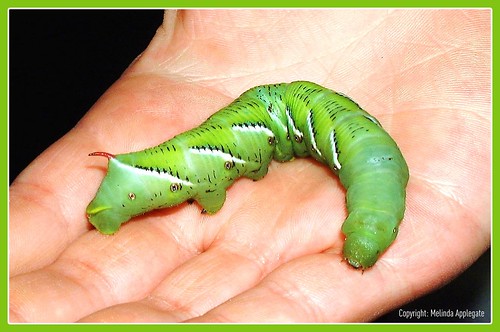
For the rest of the spring and a good part of the summer, the crop takes care of itself. It needs weeding, watering if it doesn't rain and once it gets up a bit then you have to pluck the tobacco worms off:

By late summer the crop is taller than most people and begins to flower:
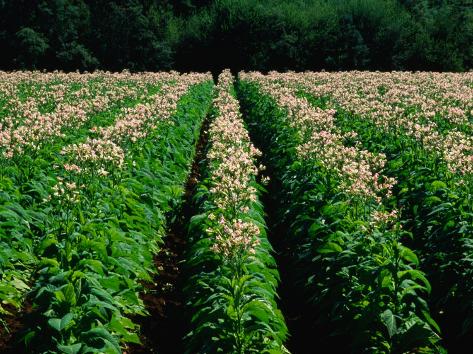
The flowers are broken off , called 'topping' the tobacco, so that the plants resources can focus on growing larger leaves. Once the leaves begin turning yellow its time to start cutting.
 |
| This isn't a very good looking crop. |
 |
| Cutting. |
My dad would sometimes come help during cutting and housing as would the other men of the family. This was the time when my granny would cook holiday size meals to feed the work hands. My mom and aunt would help then too. Keep in mind that cutting and housing usually coincided with canning season...I hate breaking beans and shucking corn to this day...but dang I sure miss those home canned foods!
 |
| Housing. |

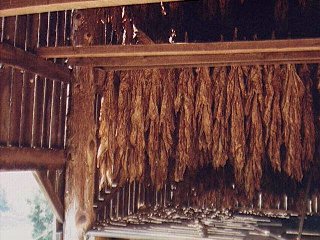
After the tobacco cures then comes 'into case', a mysterious state I never fully understood but it has something to do w/ the amount of moisture in the leaves, its ready to be stripped from the stalks. Once again this was a family endeavor.
 |

Take a look at the mans fingers in the picture below:

Notice the blackened fingers? I remember everyone's hands being black as tar and sticky when they came out of the stripping room. The kids hauled the stalks out as we couldn't be trusted to pull the right leaves or the right way. Different leaves had different names (again, that knowledge is lost to me) and were different grades. That black junk didn't just end up on hands, by the end of the day the inside of your nose would be black and your boogers would be rock hard and black as coal. Yes, a little graphic but its the truth.
From the stripping room, the tobacco is bound into bales and hauled off to sell:

After that, its bought by various companies and made into cigarettes. Most burley tobacco from Kentucky does not become cigars, a different type of tobacco is needed for that. Most of the country looks upon those big cigarette companies with hate and disgust in their eyes...the new devils that must be driven out. And don't get me wrong, I don't like smoking, its a habit I am thankful I never picked up, I saw the devastation it can cause in my own family. But because I have roots in tobacco, I see a different side to it. I know that the crop was supported thousands of Kentucky families, put food on their tables and clothes on their backs. As tobacco has become an 'evil' crop most families have sold off the family farms, the land here isn't good for raising much else. So now the countryside that used to look like this:

Looks like this:


While I can't say that coming home covered in black, sticky tar sounds fun, the social aspects of setting and the giant family meals during the harvest sound like a wonderful memory.
ReplyDeleteThat was a really fascinating look! I used to see the tobacco fields and farms when I lived in the south bit being a northerner I never knew anything about it. The push of progress reminds me of what is happening to our dairy farms here. Its a whole way of life that's being lost.
ReplyDeleteVery interesting and informative perspective! Have to admit that I know very little about the tobacco fields. Recently discovered that generations of my father's family were from Kentucky.
ReplyDelete